
Charter Guide
How to Charter a Private Jet, Start to Finish
A phone call, a quote, a signature and a departure time. The complicated part happens on our side of that call.
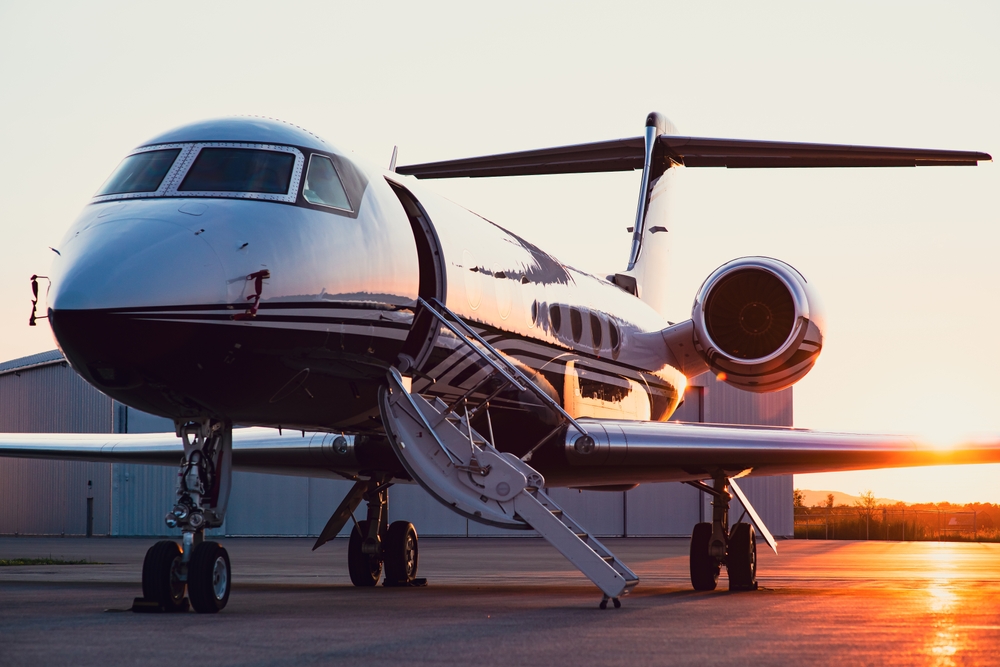
Most people who charter for the first time expect it to be complicated. It is not. It is a phone call, a quote, a signature, and a departure time.
What is genuinely complicated is what happens on our side of that call: sourcing the right aircraft, verifying the operator, checking the crew, and building a price that does not move after you agree to it. This is the whole process, including the parts that are usually left out of guides like this.
Step 1: Define the Trip
A useful quote needs five things.
What we need before we can price anything
Departure and destination
City is enough to start. The specific airport affects the price, and we will advise on options at both ends.
Dates and rough times
A departure window is better than a fixed minute at this stage.
Passenger count
The real number, including anyone who might join.
Baggage
Not just how many bags — what kind. Golf clubs, skis, hunting cases and camera gear drive the aircraft decision more often than seats do.
Anything non-negotiable
A hard arrival deadline, a required Wi-Fi connection, a pet traveling with you, a wheelchair.
Vague requests produce vague quotes. The more precise the brief, the tighter the price.
Step 2: Request a Quote
Once we have the trip, we source against it. That means checking which suitable aircraft are actually in position near your departure point on your date, because an aircraft sitting 600 miles away carries a repositioning cost you would rather not pay.
It also means verifying the operator. Trilogy is a charter broker, not an operator — we do not own or operate aircraft. Every flight we arrange is flown by an FAA-certificated Part 135 air carrier.
Verified on every trip, before a quote goes out
- An FAA Part 135 air carrier certificate. Every flight we arrange is operated by a certificated carrier, not a private aircraft flying for hire.
- A passing ARGUS TripCheq or Wyvern Pass Report. Third-party audit reports confirming the carrier, the specific aircraft and the crew qualifications for your trip — not a general rating of the company.
- Two qualified pilots on every flight, including on aircraft certified for single-pilot operation. That is our standard, not the FAA's.
You should receive an itemized quote, not a lump sum. If any broker or operator gives you a single number with no breakdown, ask for the line items before you go further.
Step 3: Understand What You Are Paying For
A charter quote is built from a handful of components. The first is the aircraft hourly rate, driven by aircraft class.
Approximate US market hourly rates, 2026
Market averages, not a quote. Which class suits a given trip is decided by range, runway length and baggage volume before rate enters the conversation.
What sits on top of the hourly rate
Billable time and minimums
Operators bill flight time, not the total time you spend traveling. Most also apply a minimum — commonly two flight hours per booking, and a minimum billable time per leg. A 40-minute hop is usually billed at an hour or more. This is standard across the industry and worth knowing before you compare quotes.
Repositioning
If the aircraft is not already where you are, it flies to you empty, and that leg is billed. It is the single largest swing factor between two quotes for the same trip on the same aircraft class, and it is why availability near your departure airport matters as much as the hourly rate.
Taxes and segment fees
Domestic charter carries a 7.5% Federal Excise Tax plus a per-segment fee of roughly $5, indexed annually. A segment is each takeoff-to-landing leg, so a round trip incurs both twice. Non-negotiable, and on every domestic invoice.
Landing, ramp and FBO handling
Airports charge landing fees by aircraft weight. FBOs add ramp and handling charges, commonly $150 to $500 per visit. Fees at major commercial airports run higher than at reliever fields, which is one reason we often recommend the smaller airport.
Crew and catering
Crew overnight costs apply when a trip requires the crew to stay, typically $150 to $500 per crew member per night. On Part 135 flights a flight attendant is required when carrying ten or more passengers, and many aircraft owners require one regardless. Where one is required, that cost is included in our quotes rather than added later. Catering ranges from complimentary refreshments to full meal service, priced accordingly.
Together, the items below the hourly rate typically add 20% to 40% to the base. A quote that omits them is not a cheaper trip; it is an incomplete quote.
Step 4: Confirm and Contract
You will sign a charter agreement covering the itinerary, the aircraft, the total price and the cancellation terms. Read the cancellation window — it varies by operator and it is the term that most often surprises people.
Payment is normally due before departure. Timing depends on how far ahead you book and on the operator.
Step 5: The Day of the Flight
There is no security queue and no boarding process. In most cases you can drive directly to the aircraft — tell your charter advisor in advance if you want to arrive plane-side.
- ArrivalReach the FBO 15 to 30 minutes before your scheduled departure and park a short walk from the aircraft.
- DepartureNo security line, no boarding groups. The aircraft leaves once you are aboard.
- TouchdownStep off onto the ramp, your bags come off with you, and ground transport can be waiting beside the aircraft.
A note on FBOs: the operator usually selects it, generally based on fuel pricing and existing relationships. Most will accommodate a different FBO on request, though there may be a surcharge. Bring what you want — outside food and drink are fine, with none of the commercial restrictions on liquids. If you are bringing a case of wine or anything bulky, say so beforehand so it can be stowed properly.
Airborne in as little as two hours. That is a genuine capability, not a guarantee for every trip.
How Long Does It Actually Take to Arrange?
Short-notice charter is routine. Depending on aircraft availability, crew duty status and airport operating hours, a flight can often be arranged and airborne within a couple of hours.
- Aircraft position. An aircraft already near your departure airport is the difference between two hours and half a day.
- Part 135 crew duty and rest limits. Federal rules, not preferences. A crew at the end of a duty day cannot simply be asked to fly another leg.
- Destination airport curfews. Noise-restricted and limited-hours fields decide when you can land, regardless of when you are ready to go.
Any advisor who promises two hours without checking those three things has not checked them. For anything with a hard deadline, or for peak periods such as October and the holiday season, book further ahead.
On-Demand Charter Compared With Other Ways to Fly Private
There are three main structures, and each suits a different flying pattern.
Three structures, priced against three different flying patterns
On-demand charter
You are quoted for each flight and can choose a different aircraft class every time. No annual commitment.
Best for: variable or occasional travel.
Jet cards
An upfront deposit in exchange for fixed hourly pricing and guaranteed availability within set terms. The trade is capital commitment for price certainty and simplified booking.
Best for: generally above roughly 25 flight hours a year.
Fractional ownership
Buying a share in a specific aircraft, with monthly management fees and an occupied hourly rate alongside. The heaviest commitment of the three.
Best for: high, predictable annual usage.
None of these is better than the others in the abstract. They price differently against different flying patterns.
The right question is how many hours you fly and how predictable they are. We have written a longer comparison of the alternatives to a jet card if you are weighing the commitment.
How to Verify Whoever You Are Booking With
This applies whether you use us or not.
- Confirm the operating certificate. Every legitimate charter flight is operated under an FAA Part 135 Air Carrier Certificate. Ask which operator is flying your trip and confirm their certificate.
- Check the third-party safety audit. ARGUS and Wyvern are the two recognized auditors. Ask whether a trip-specific report has been run for your flight, not just whether the company is generally rated.
- Know whether you are talking to a broker or an operator. Both are legitimate. If it is a broker, ask which operator will actually fly you, and verify that operator separately.
- Get the quote itemized. Line-item transparency is the clearest signal of a broker worth trusting.
- Compare more than one. Three quotes on the same trip will quickly show you whether one is missing something.
Frequently Asked Questions
How much does it cost to charter a private jet?
Hourly rates run roughly $1,800 to $2,500 for turboprops, $2,600 to $3,500 for light jets, $3,500 to $5,500 for midsize jets, and $8,000 or more for heavy jets. Positioning, taxes, landing and crew costs typically add 20% to 40% on top. A short domestic trip on a light jet commonly totals $8,000 to $12,000.
How far in advance do I need to book?
Routine trips can often be arranged within a week, and short-notice charters are available in as little as two hours, depending on aircraft position and crew availability. Peak periods, group charters and trips with hard arrival deadlines should be booked four to six weeks out.
Do you go through TSA on a private jet?
No. Private charter passengers do not pass through TSA checkpoints. You arrive at the FBO 15 to 30 minutes before departure, and in most cases can drive directly to the aircraft. Identification is still required, and international flights clear customs and immigration.
How many passengers can charter a private jet?
From two to nineteen or more, depending on the aircraft. Turboprops and light jets carry four to eight, midsize and super-midsize carry seven to ten, and heavy and ultra-long-range jets carry ten to nineteen. Larger groups can be accommodated on VIP airliners or across multiple aircraft.
Can I charter a one-way flight?
Yes. One-way charter is standard. Pricing may include a repositioning charge for the aircraft's return or onward leg, which is why one-way trips are not always half the price of a round trip.
Start With the Trip
Tell us where you need to be and we will quote it, itemized, with the operator named.
Trilogy Aviation Group is an on-demand charter broker based in Fort Worth, Texas, founded in 2018. We are ARGUS Registered and Wyvern certified, members of the Air Charter Association and NBAA, with access to more than 7,000 aircraft worldwide.