
Private Jet FAQ
How Fast Do Private Jets Actually Fly?
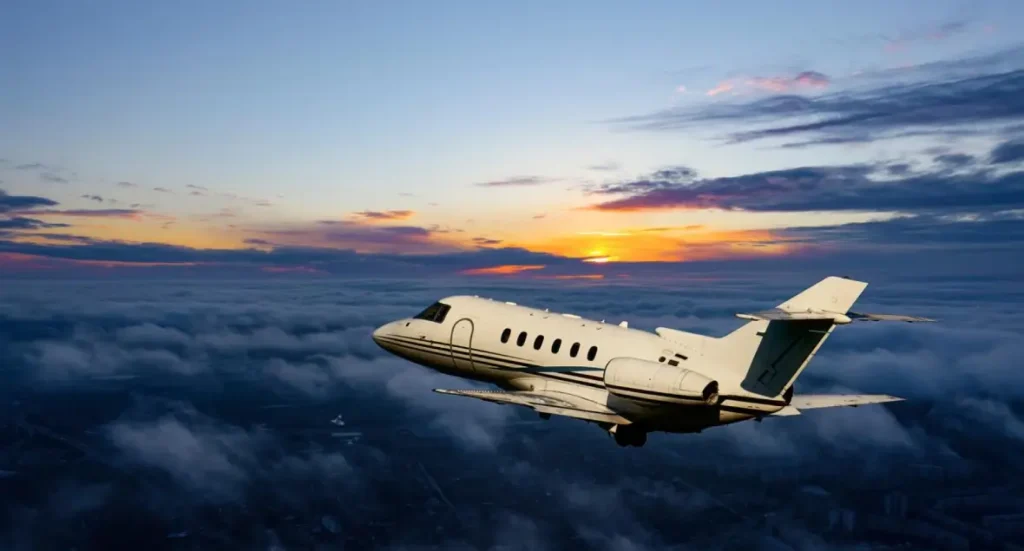
Most private jets cruise between 400 and 600 mph. Almost none of the time you save happens in the air.
- Typical cruise speed
- 400-600mph
- Avg. time saved per flight
- 127min
- U.S. airports you can use
- 5,000+
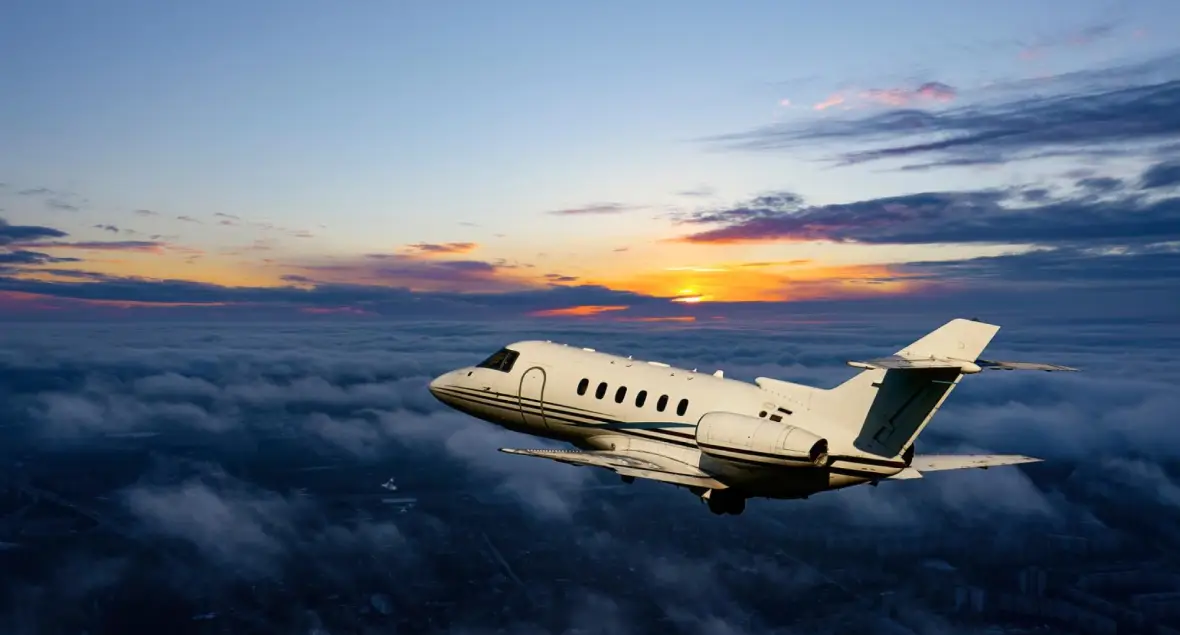
Most private jets cruise between 400 and 600 mph. The fastest in service, the Cessna Citation X+, tops out near 717 mph. Those are the numbers people search for, and on their own they explain almost nothing.
A Boeing 787 cruises at roughly 560 mph. A midsize business jet cruises at roughly 480. On paper, the airliner wins. In practice the private flight puts you at your destination hours earlier, and almost none of that margin is made up in the air. Speed in private aviation is a door-to-door measurement.
Cruise Speeds by Aircraft Class
Five classes, plotted by typical cruise speed
Turboprops
300-350 mph
The only class that is meaningfully slower than the rest. On a 400-mile regional leg that gap costs you very little, because a jet never gets the altitude or the time to convert its speed advantage into an earlier arrival.
Real-world: short legs where the aircraft spends most of its time climbing and descending anyway.
Light jets
400-480 mph
Fast enough that the flight time on a two- or three-hour trip is within minutes of what a much larger aircraft would achieve. The constraints on this class are range and baggage volume, not speed.
Real-world: two to three hours in the air, small groups, light bags.
Midsize jets
430-490 mph
Where most business travel lands, and roughly 80 mph slower at cruise than a Boeing 787. The midsize still beats the airliner door to door by a wide margin, which is the clearest evidence that cruise speed is not what you are buying.
Real-world: cross-country trips, full working groups, real luggage.
Super-midsize jets
480-540 mph
The step up from midsize buys range reliability and cabin volume far more than it buys speed. Coast to coast nonstop against a headwind with a full cabin is the capability that matters here.
Real-world: transcontinental nonstop, larger groups, longer days.
Heavy and long-range jets
500-600 mph
Here the speed finally compounds, because the legs are long enough for it to. Over an ocean, 60 mph of extra cruise speed is an hour. Over Texas, it is four minutes.
Real-world: international and transoceanic trips, where rest on board is part of the plan.
Cruise speeds cluster tightly. Across a 900-mile trip, the difference between a light jet and a super-midsize is roughly twenty minutes of flight time.
Aircraft speed is usually quoted in knots rather than mph. One knot is about 1.15 mph, so a jet cruising at 450 knots is moving at roughly 518 mph. Manufacturers also publish speeds as a Mach number, a fraction of the speed of sound: a Gulfstream G650 at Mach 0.85 is doing about 560 mph at altitude.
The spread between the slowest light jet and the fastest long-range jet is real, but it is narrower than most people expect. Which class is right for a given trip is decided by range, runway length and baggage volume long before speed enters the conversation.
Airspeed Is Not the Same as Ground Speed
Airspeed is how fast the aircraft moves through the air around it. Ground speed is how fast it covers the earth beneath it. Wind is the difference, and on a transcontinental leg the difference is close to an hour.
One aircraft, 480 mph airspeed, three different days
Ground speed, not airspeed. Two identical aircraft on the same route an hour apart in block time.
This is why a quoted cruise speed is a starting point and not a promise. When we build a quote, flight time is calculated against forecast winds aloft for your specific departure day, not against a brochure figure.

Private Jets Fly Higher, and That Matters More
Typical cruise altitude
Above the main airway structure, and above most convective weather.
Higher altitude means thinner air, less drag and better efficiency at a given speed. It also means fewer aircraft in the way. Flights operating above the commercial traffic get more direct routing and fewer holds, and they climb over weather rather than deviating around it.
The result is not a faster aircraft. It is a shorter line between two points, which is worth more than a faster aircraft on a bad weather day.
The Time You Actually Save Is on the Ground
Run a typical commercial itinerary honestly. You leave for DFW two hours before departure because that is what the airline recommends. Remote lot, shuttle, security, boarding groups, pushback, and if the airport is busy you sit. You land, you deplane behind 180 other people, you wait at the carousel, then you find ground transport. On a connecting itinerary, add the layover.
- ArrivalReach the FBO 15 to 30 minutes before departure and park a short walk from the aircraft.
- DepartureNo security line, no boarding groups. The aircraft leaves when you are on it.
- TouchdownStep off onto the ramp, bags come off with you, car waiting beside the aircraft.
A study by the European Business Aviation Association put the average time saved at 127 minutes per flight compared with commercial travel. That figure is the entire argument, and it has almost nothing to do with cruise speed.
Roughly fifteen percent faster in the air. A hundred percent faster in the calendar.
One Day, Three Cities
A client needs a site visit in Midland, a dinner in Denver, and to sleep at home in Dallas.
The private version, one calendar day
-
9:00 a.m.Depart Dallas, land in Midland in just under an hour
Straight to the site. Meetings and lunch on the ground until 2:00 p.m.
-
2:30 p.m.Airborne again, on the ground in Denver by 3:55 local
Time to check in, change and get downtown for dinner.
-
8:30 p.m.Depart Denver, through your own front door in Dallas before midnight
No hotel, no second working day, no return itinerary to build around.
Times are illustrative. Actual schedules depend on aircraft, airports and winds on the day.
Commercially, there is no realistic version of this in one day. Dallas to Midland requires an early departure and a fixed return. Midland to Denver almost certainly connects through a hub. You are staying overnight in Denver and flying home the following day, and you have spent two working days and a hotel night on what the aircraft did between breakfast and bedtime.
The aircraft was roughly fifteen percent faster in the air. The trip was a hundred percent faster in the calendar. That gap is the point.
The Airports Airlines Do Not Serve
U.S. airports, by who can use them
FAA figures. That ratio is where a large share of the time saving actually comes from.
Flying commercially to a meeting in a smaller market often means landing at the nearest large airport and driving ninety minutes. A private flight can land at the general aviation field ten minutes from the office. In Dallas-Fort Worth alone, departing from a reliever field rather than a major hub can save forty-five minutes before you have left the ground.
Shorter runways favor lighter aircraft, which is why runway length at both ends is one of the variables that decides which aircraft is right for the trip.
What Actually Slows a Private Flight Down
Honest limits, because they exist.
- Below 10,000 feet, the FAA caps aircraft at 250 knots. Departure and arrival are speed-limited regardless of what the aircraft can do.
- Air traffic control still applies. Busy terminal airspace around major metros creates delays for everyone in it.
- Crew duty limits are federal. Part 135 crews operate to strict duty and rest rules. A late change to a long day may require a crew swap, not a longer duty period.
- Some airports have curfews or limited operating hours. A late departure into a noise-restricted field is a scheduling problem, not a speed problem.
- Headwinds are undefeated. Nobody outruns the jet stream.
An advisor who does not raise these before you book is not doing the job. Precision, consistency, no luck.
Frequently Asked Questions
How fast do private jets fly compared to commercial planes?
Similarly, and sometimes slower. Most private jets cruise between 400 and 600 mph; most airliners cruise between 500 and 600 mph. The advantage of private travel is not raw airspeed. It comes from direct routing, higher cruise altitudes, no security or boarding queues, and access to airports closer to your destination.
What is the fastest private jet?
The Cessna Citation X+ is the fastest civilian business jet in service, with a top speed near 717 mph, or Mach 0.935. The Gulfstream G650ER is comparable, at a maximum operating speed of Mach 0.925. Both are long-range aircraft, so the speed advantage is most useful on transcontinental and international trips.
How high do private jets fly?
Many business jets are certified to 45,000 feet, and several long-range types can operate at 51,000 feet. That is above most commercial traffic, which typically cruises between 33,000 and 40,000 feet. The higher cruise altitude means less drag, more direct routing and fewer weather deviations.
How much time does flying private actually save?
The European Business Aviation Association puts the average at 127 minutes per flight versus commercial. On multi-stop or multi-city itineraries the savings compound, and trips that would take two days commercially frequently compress into one.
Trilogy Aviation Group
Plan the Trip Around Your Day
Tell us where you need to be and when you need to be there. We will build the trip backward from your calendar, and we will tell you honestly what the aircraft can and cannot do on the day.
Trilogy Aviation Group is an on-demand charter broker based in Fort Worth, Texas. We are an ARGUS-registered and Wyvern-certified broker with access to more than 7,000 aircraft, and we arrange flights with FAA Part 135-certificated operators worldwide.