
Private Jet FAQ
How to Charter a Private Jet, Start to Finish
The full charter process from quote to landing, what actually drives the cost, and how quickly a jet can be arranged. Written by a Fort Worth charter broker.
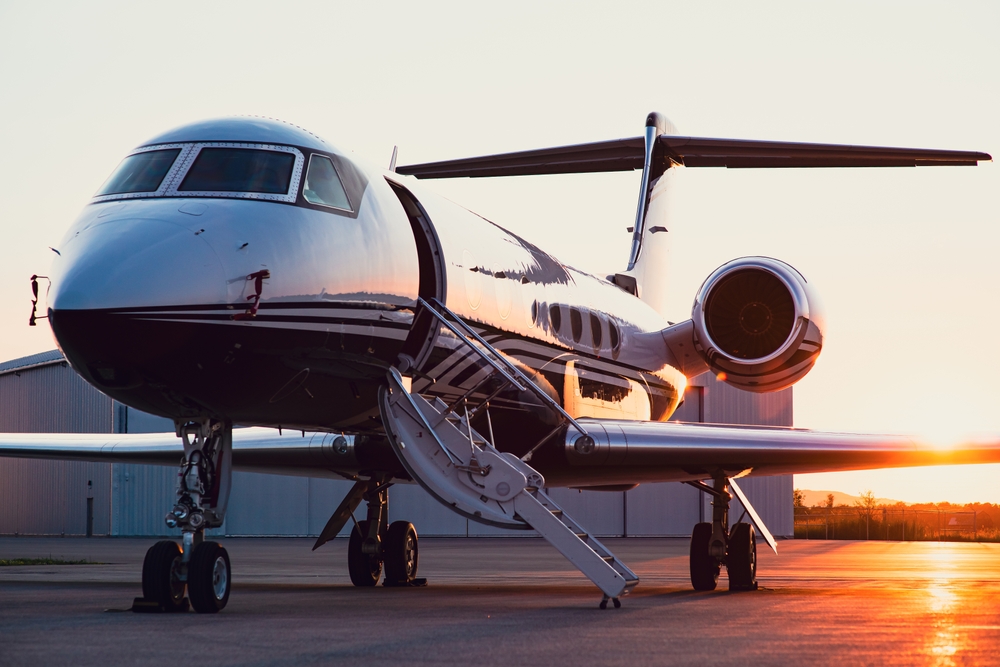
Most people who charter for the first time expect it to be complicated. It is not. It is a phone call, a quote, a signature, and a departure time.
What is genuinely complicated is what happens on our side of that call: sourcing the right aircraft, verifying the operator, checking the crew, and building a price that does not move after you agree to it. This is the whole process, including the parts that are usually left out of guides like this.
Step 1: Define the Trip
A useful quote needs five things.
- Departure and destination. City is enough to start. The specific airport affects the price, and we will advise on options at both ends.
- Dates and rough times. A departure window is better than a fixed minute at this stage.
- Passenger count. The real number, including anyone who might join.
- Baggage. Not just how many bags, but what kind. Golf clubs, skis, hunting cases and camera gear drive the aircraft decision more often than seats do.
- Anything non-negotiable. A hard arrival deadline, a required Wi-Fi connection, a pet traveling with you, a wheelchair.
Vague requests produce vague quotes. The more precise the brief, the tighter the price.
Step 2: Request a Quote
Once we have the trip, we source against it. That means checking which suitable aircraft are actually in position near your departure point on your date, because an aircraft sitting 600 miles away carries a repositioning cost you would rather not pay.
It also means verifying the operator. Trilogy is a charter broker, not an operator, so we do not own or operate aircraft. Every flight we arrange is flown by an FAA-certificated Part 135 air carrier, and for each flight we require a passing ARGUS TripCheq or Wyvern Pass Report. Those are third-party audit reports confirming the carrier, the specific aircraft and the crew qualifications for your trip, not a general rating of the company. We also require two qualified pilots on every flight, including on aircraft certified for single-pilot operation. That is our standard, not the FAA’s.
You should receive an itemized quote, not a lump sum. If any broker or operator gives you a single number with no breakdown, ask for the line items before you go further.
Step 3: Understand What You Are Paying For
A charter quote is built from these components. The first is the aircraft hourly rate, driven by aircraft class.
| Aircraft class | Typical hourly rate, 2026 |
|---|---|
| Turboprop | $5,042 |
| Very light jet | $5,583 |
| Light jet | $6,612 |
| Midsize jet | $7,553 |
| Super light jet | $7,732 |
| Super midsize jet | $9,112 |
| Heavy jet | $11,443 |
Billable time and minimums. Operators bill flight time, not the total time you spend traveling. Most also apply a minimum, commonly two flight hours per booking and a minimum billable time per leg. A 40-minute hop is usually billed at an hour or more.
Repositioning. If the aircraft is not already where you are, it flies to you empty, and that leg is billed. It is the single largest swing factor between two quotes for the same trip on the same aircraft class.
Taxes and segment fees. Domestic charter carries a 7.5% Federal Excise Tax plus a per-segment fee of roughly $5, indexed annually. A segment is each takeoff-to-landing leg, so a round trip incurs both twice.
Landing, ramp and FBO handling. Airports charge landing fees by aircraft weight. FBOs add ramp and handling charges, commonly $150 to $500 per visit. Fees at major commercial airports run higher than at reliever fields.
Crew and catering. Crew overnight costs apply when a trip requires the crew to stay, typically $150 to $500 per crew member per night. On Part 135 flights a flight attendant is required when carrying ten or more passengers, and many aircraft owners require one regardless. Catering ranges from complimentary refreshments to full meal service.
Together, the items below the hourly rate typically add 20% to 40% to the base. A quote that omits them is not a cheaper trip; it is an incomplete quote.
Step 4: Confirm and Contract
You will sign a charter agreement covering the itinerary, the aircraft, the total price and the cancellation terms. Read the cancellation window, because it varies by operator and it is the term that most often surprises people. Payment is normally due before departure. Timing depends on how far ahead you book and on the operator.
Step 5: The Day of the Flight
Arrive at the FBO 15 to 30 minutes before your scheduled departure. There is no security queue and no boarding process. In most cases you can drive directly to the aircraft. Tell your charter advisor in advance if you want to arrive plane-side.
A note on FBOs: the operator usually selects it, generally based on fuel pricing and existing relationships. Most will accommodate a different FBO on request, though there may be a surcharge.
Bring what you want. Outside food and drink are fine, with none of the commercial restrictions on liquids. If you are bringing a case of wine or anything bulky, say so beforehand so it can be stowed properly. The aircraft departs once you are aboard. On arrival you step off onto the ramp, your bags come off with you, and ground transport can be waiting beside the aircraft.
How Long Does It Actually Take to Arrange?
Short-notice charter is routine. Depending on aircraft availability, crew duty status and airport operating hours, a flight can often be arranged and airborne in as little as two hours. That is a genuine capability, not a guarantee for every trip. Aircraft position, Part 135 crew duty and rest limits, and destination airport curfews all affect it. Any advisor who promises two hours without checking those three things has not checked them.
For anything with a hard deadline, or for peak periods such as October and the holiday season, book further ahead.
On-Demand Charter Compared With Other Ways to Fly Private
There are three main structures, and each suits a different flying pattern.
On-demand charter. Pay per trip. No deposit, no annual commitment, no expiring hours. You are quoted for each flight and can choose a different aircraft class every time. Best suited to variable or occasional travel.
Jet cards. An upfront deposit, commonly $50,000 or more, in exchange for fixed hourly pricing and guaranteed availability within set terms. The trade is capital commitment for price certainty and simplified booking. Generally makes sense above roughly 25 flight hours a year.
Fractional ownership. Buying a share in a specific aircraft, with monthly management fees and an occupied hourly rate alongside. The heaviest commitment, suited to high, predictable annual usage.
None of these is better than the others in the abstract. They price differently against different flying patterns, and the right question is how many hours you fly and how predictable they are.
How to Verify Whoever You Are Booking With
This applies whether you use us or not.
- Confirm the operating certificate. Every legitimate charter flight is operated under an FAA Part 135 Air Carrier Certificate. Ask which operator is flying your trip and confirm their certificate.
- Check the third-party safety audit. ARGUS and Wyvern are the two recognized auditors. Ask whether a trip-specific report has been run for your flight, not just whether the company is generally rated.
- Know whether you are talking to a broker or an operator. Both are legitimate. If it is a broker, ask which operator will actually fly you, and verify that operator separately.
- Get the quote itemized. Line-item transparency is the clearest signal of a broker worth trusting.
- Compare more than one. Three quotes on the same trip will quickly show you whether one is missing something.
Frequently Asked Questions
How much does it cost to charter a private jet?
Hourly rates run roughly $1,800 to $2,500 for turboprops, $2,600 to $3,500 for light jets, $3,500 to $5,500 for midsize jets, and $8,000 or more for heavy jets. Positioning, taxes, landing and crew costs typically add 20% to 40% on top. A short domestic trip on a light jet commonly totals $8,000 to $12,000.
How far in advance do I need to book?
Routine trips can often be arranged within a week, and short-notice charters are available in as little as two hours, depending on aircraft position and crew availability. Peak periods, group charters and trips with hard arrival deadlines should be booked four to six weeks out.
Do you go through TSA on a private jet?
No. Private charter passengers do not pass through TSA checkpoints. You arrive at the FBO 15 to 30 minutes before departure, and in most cases can drive directly to the aircraft. Identification is still required, and international flights clear customs and immigration.
How many passengers can charter a private jet?
From two to nineteen or more, depending on the aircraft. Turboprops and light jets carry four to eight, midsize and super-midsize carry seven to ten, and heavy and ultra-long-range jets carry ten to nineteen. Larger groups can be accommodated on VIP airliners or across multiple aircraft.
Can I charter a one-way flight?
Yes. One-way charter is standard. Pricing may include a repositioning charge for the aircraft’s return or onward leg, which is why one-way trips are not always half the price of a round trip.
Start With the Trip
Trilogy Aviation Group is an on-demand charter broker based in Fort Worth, Texas, founded in 2018. We are ARGUS Registered and Wyvern certified, members of the Air Charter Association and NBAA, with access to more than 7,000 aircraft worldwide. Tell us where you need to be and we will quote it, itemized, with the operator named. Call 817-769-8714 or request a quote online.
Tell us where you need to be
Give us the trip and we will tell you quickly whether we can help, and just as quickly if we cannot.
Trilogy Aviation Group is an on-demand private jet charter broker based in Fort Worth, Texas. We are an ARGUS Registered Broker and a Wyvern Certified Partner, with access to more than 7,000 private jets worldwide, and our team is reachable around the clock.